


A new William Blair survey finds LPs support the liquidity optionality provided by continuation vehicles (“CVs”) by a margin of roughly two to one. While opinion is still divided, the debate has largely moved from whether CVs should be used, to how general partners (“GPs”) should approach using them.
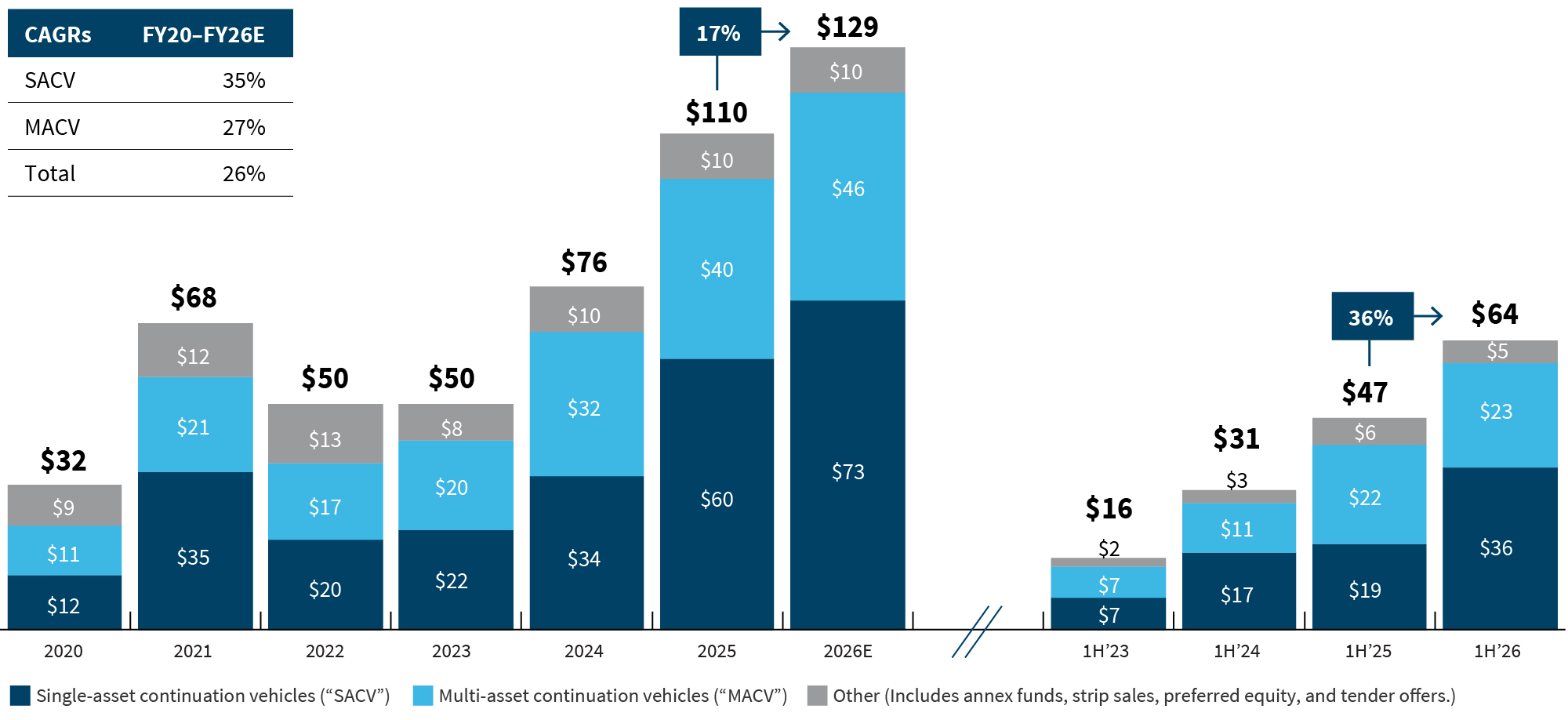
These findings come as global secondary volume is on track to reach $252 billion in 2026, up from $220 billion in 2025, reflecting a 27% CAGR from 2020. Within global secondary volume, GP-led volume—which is primarily driven by CVs—is expected to reach $129 billion in 2026, up from $110 billion in 2025, reflecting a 26% CAGR from 2020. Of all CV transaction structures, single-asset CVs have grown the fastest, demonstrating a 35% CAGR over the same period. In the first half of 2026, GP-led volume reached $64 billion, up 36% from the prior year. [1]
Global GP-Led Secondary Volumes
(In billions)
Recent capital formation points to continued growth. Over the past 12 months, dedicated secondary funds raised approximately $112 billion, up nearly 19% year-over-year and on par with the record full-year total for 2025. [2] CVs have become an important structural tool for private equity sponsors to maintain exposure to top-performing companies while providing limited partners (“LPs”) a liquidity option—and we estimate that CVs now represent between 10% and 20% of all sponsor exits.
While the growth of the CV market is well documented, very little detail has been published on how LPs view these transactions. The goal of this report is to shed light on LP perspectives and provide insights that will benefit both LPs and GPs as they navigate the continued growth and evolution of this market. To that end, William Blair’s Private Capital Advisory team surveyed limited partners and limited partner advisory committee (“LPAC”) [3] members on attitudes and perceptions of CVs from July to August 2026. Additional detail on our survey methodology can be found in the appendix to this report.
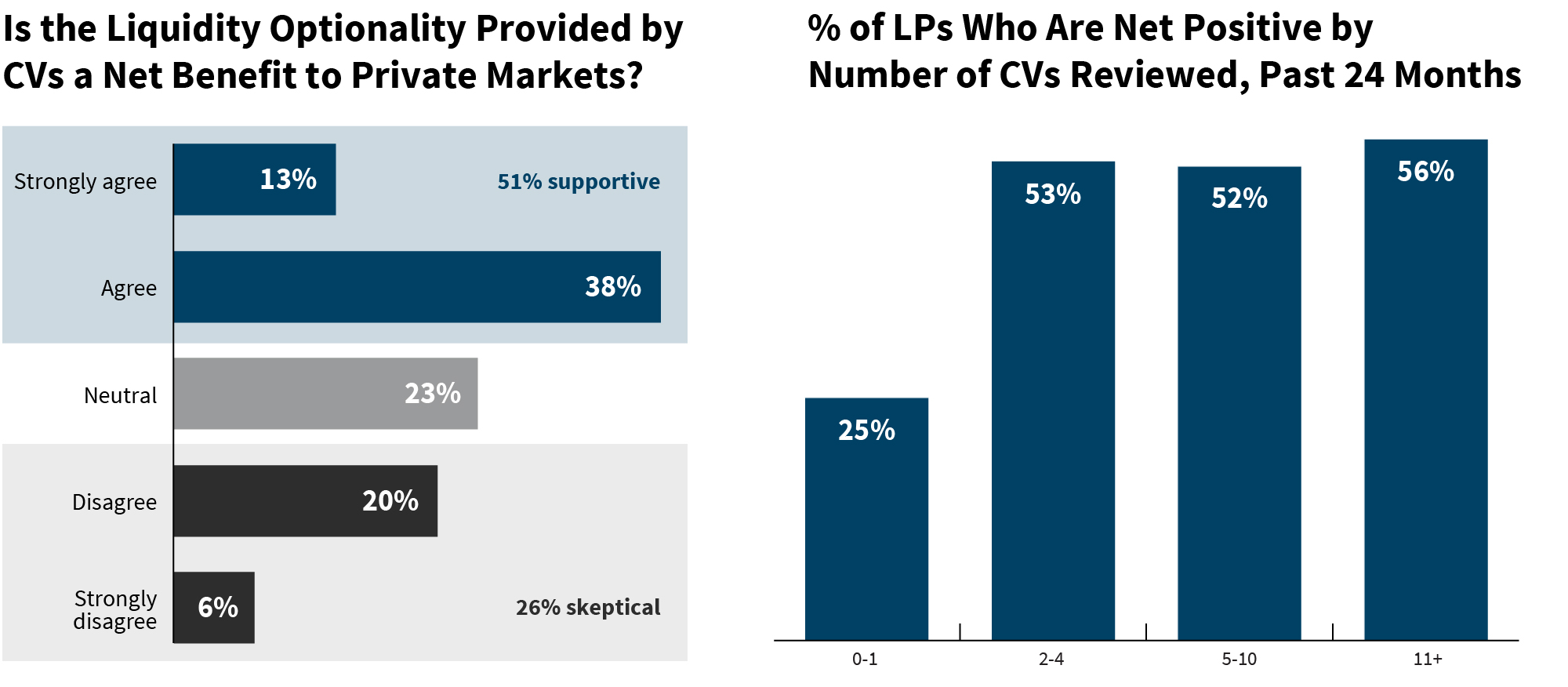
Our top-line survey finding: LPs support CV liquidity optionality by a margin of roughly two to one—51% agree CVs are a net benefit to private markets compared with 26% who disagree, and support more than doubles with greater CV experience.
CV Liquidity Optionality as a Net Benefit to Private Markets
Unpacking LP Perspectives on CV Transactions
While roughly half of LPs agreed that CV liquidity optionality is a net benefit to private markets, the percentage of respondents who strongly agreed or strongly disagreed was small, with most respondents sitting in the middle and 23% of respondents neutral.
Respondents judge each transaction on its merits, which makes broad characterizations in a quickly evolving market difficult. Notably, positive sentiment more than doubled among LPs who evaluated at least two CVs in the past 24 months. These LPs have likely seen firsthand how a well-run CV process can generate meaningful liquidity optionality in a liquidity-constrained environment.
Additionally, outright opposition to CV transactions is rare. Among LPs who quantified a rate, 64% report that no CV in their funds has seen an LPAC oppose, block, or force material changes, and a further 24% said opposition occurs rarely, estimated in just 5% to 10% of CV transactions. [4]
LPs are split on their approach to evaluating CVs. More than 6 in 10 surveyed have a formal written policy or an informal, repeatable framework, while nearly 4 in 10 evaluate CVs on an ad hoc basis. LPs that evaluate CVs on an ad hoc basis may not have reviewed enough CVs to necessitate a formal policy or framework, or believe CV transactions are sufficiently varied and require a case-by-case approach.
How LPs Define Success in CV Transactions
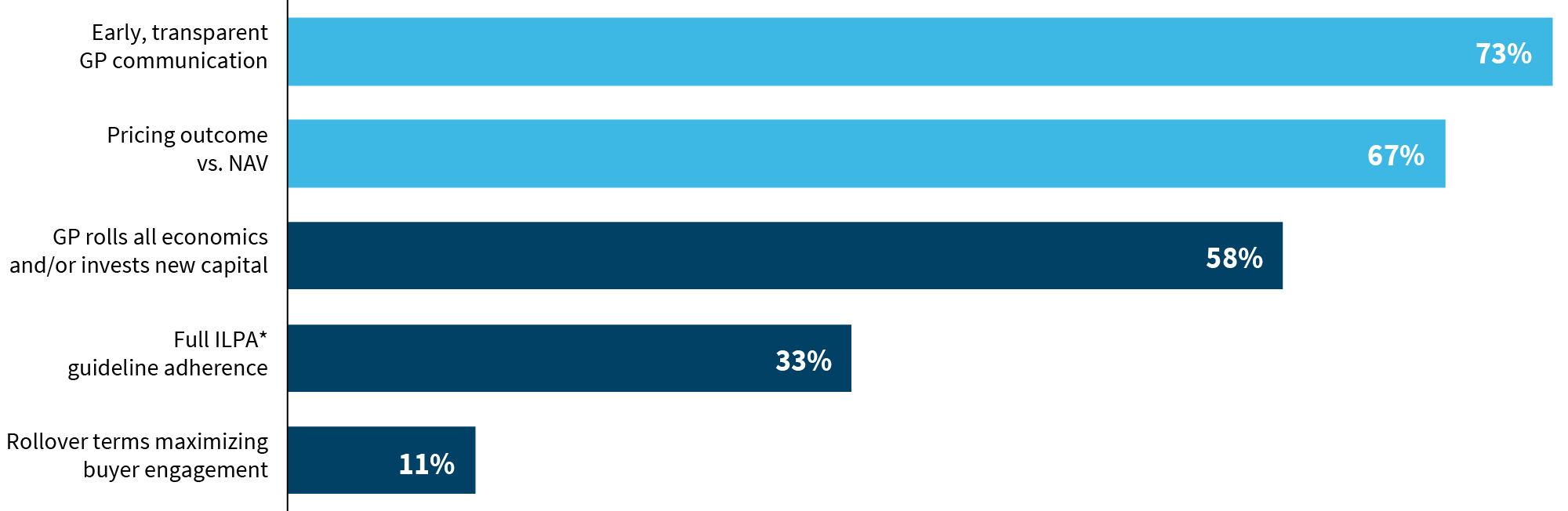
Asked what constitutes a successful CV for the selling fund, the most common responses were early, transparent GP communication and pricing outcome as a percentage of NAV. LPs want a consultative approach and confidence that a pricing outcome reflects fair market value.
The desire for early LP engagement is close to unanimous: 88% of respondents want to be notified by GPs who are exploring a CV as early as possible, even before the decision is made to pursue a transaction.
When asked where LPs most wanted a voice in the process, 56% of respondents indicated they would like to provide feedback on the decision to pursue a CV versus 27% citing LP rollover terms, and fewer than 10% citing transaction timing or structuring.
Definition of Success for the Selling Fund
(Multi-select)
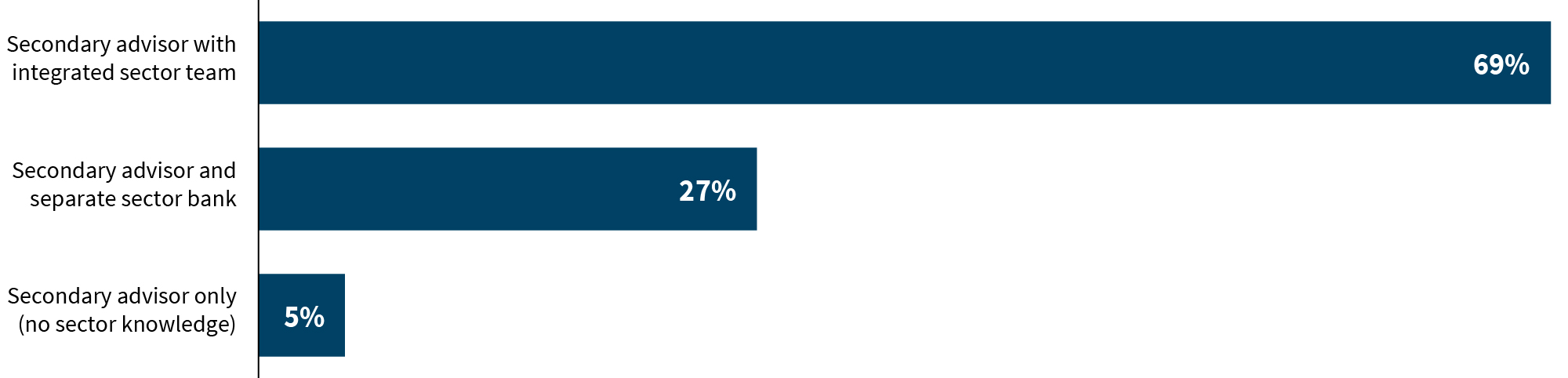
While none of the LPs surveyed cited a desire to influence advisor selection, LPs did have a resounding preference for GPs to engage advisors that bring relevant sector coverage expertise to a transaction. Asked to rank different advisor models (assuming no material difference in cost), 95% of respondents prefer an advisor with sector expertise, and 69% prefer a secondary advisor with an integrated sector team, as opposed to two separate firms providing product and sector expertise. LPs believe that sector coverage expertise underpins an advisor’s ability to effectively position an asset, support buyer engagement, and deliver a fair, market-based outcome.
Ranked Advisor Model Preference
Most LPs take liquidity in CV transactions, making price a key metric of success. However, LPs also place importance on how price was achieved. Half said a competitive CV process is sometimes proof of price, with 28% saying it depends on the number of buyers engaged. LPs have a strong desire for process evidence, including greater transparency on who bid, at what values, and the alternatives that were considered.
Roll Decisions and Sources of Friction
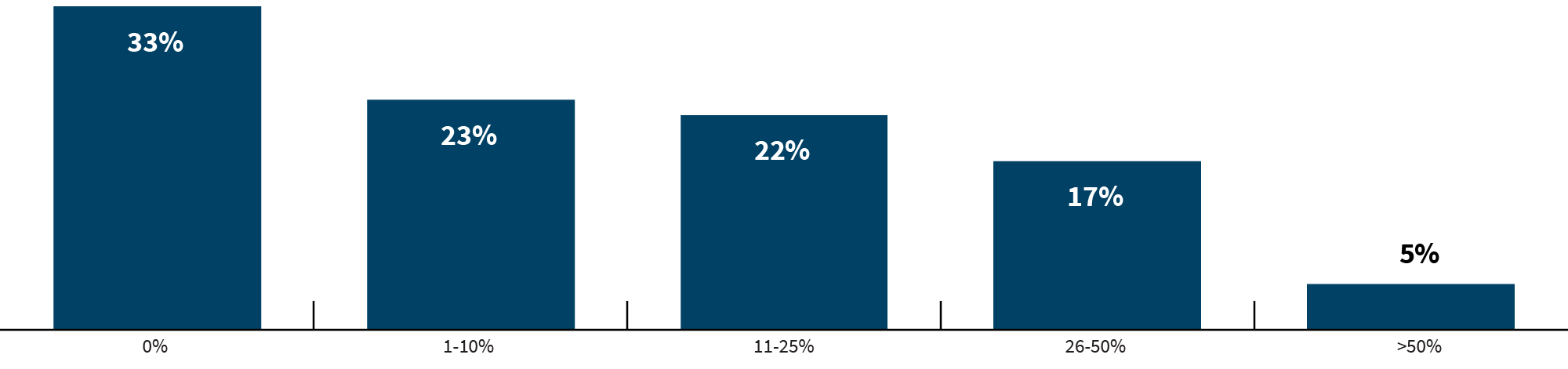
LPs generally view CVs as liquidity events, which is supported by our finding that 56% of respondents rolled into 10% or fewer of the CVs evaluated over the previous 24 months. Only 5% of respondents rolled into a majority of deals they reviewed in that same window. Respondents who viewed CV liquidity optionality as a net benefit to private markets rolled only slightly more than skeptics—suggesting that the decision to roll is more about liquidity management and portfolio construction versus a referendum on CVs.
Share of Evaluated CVs Rolled Into
Past 24 Months
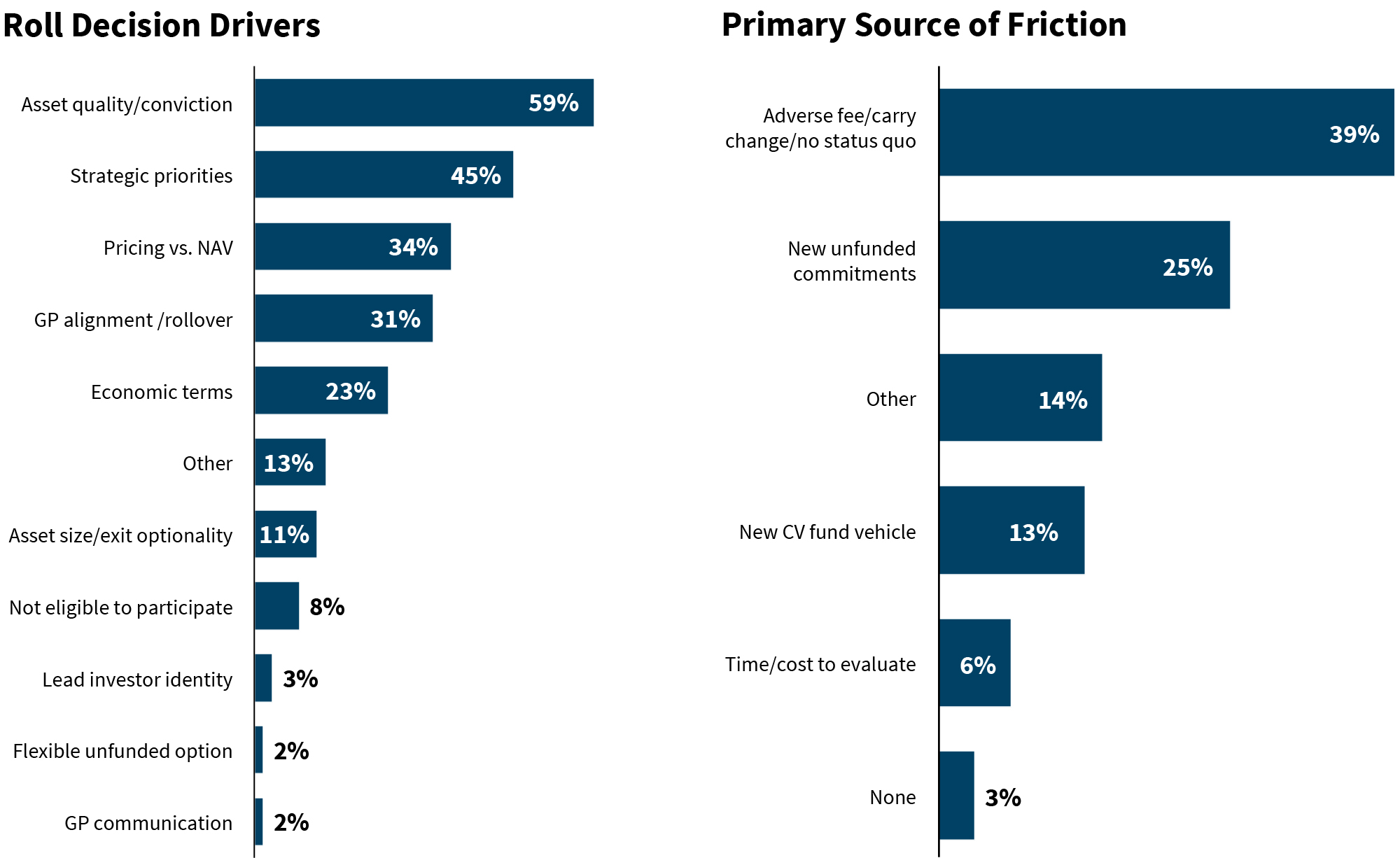
When LPs do choose to roll into CVs, they cite asset quality and conviction (59%) and their own strategic priorities (45%) as main drivers, ahead of pricing versus NAV (34%), GP alignment/rollover (31%), and economic terms (23%).
Conversely, when asked what creates the most friction in rollover decisions, 39% of respondents cited an adverse change in management fees and/or carried interest with no status quo option. A requirement to subscribe to new unfunded commitments follows at 25%.
Roll Decisions and Greatest Rollover Friction
(Multi-select)
Asked what single change would most improve CV transactions, 32% of open-ended responses focused on overall transparency and disclosure quality, the most cited theme, while price discovery and bid transparency followed at 22%. [5] Interestingly, LP sentiment has not converged on what constitutes sufficient price discovery, another reason why process fidelity and disclosure carry so much weight. Bid summaries, cited by 70% of respondents, and alternatives considered, cited by 67% of respondents, were the most cited disclosure gaps, more so than independent valuations or fairness opinions, cited by 34% of respondents.
Implications for GPs Considering CV Transactions
The findings from this survey have clear implications for GPs as they consider CV transactions within their portfolios. To ensure a successful outcome, it is critical that sponsors:
- Engage with LPs/LPAC members at the earliest opportunity
- Run a competitive auction process, supported by sector banker expertise, to ensure a robust and fair pricing outcome
- Provide a thoughtful rollover option to address LP objectives and minimize friction
- Deliver comprehensive, straightforward disclosure on CV rationale and alternatives considered, as well as an overview of the CV marketing process including bids received and key terms
Just as the broader secondary market continues to evolve, so will LP perspectives. We hope this report provides insight into LPs’ current perspectives and practical guidance for GPs as they consider these transactions in the months and years ahead.
Appendix: Survey Details
From July to August 2026, William Blair surveyed 64 limited partners and LPAC members on attitudes and perceptions toward GP-led continuation vehicles. Unless otherwise noted, all data in this report comes from the LP survey. Percentages may not sum to 100% due to rounding.
Survey respondents represent a diverse cohort of institutionally weighted, CV-experienced LPs. Here is a more detailed breakdown:
- Institutional breakdown: fund-of-funds (23%), family office (17%), public/corporate pension (14%), insurance (13%), asset manager (13%), OCIO/consultant (8%), endowment/foundation (8%), SWF/other (5%).
- Program AUM/AUA (assets under management or assets under advisement): 58% were large-cap LPs managing more than $5 billion of program AUM/AUA, 28% were mid-cap LPs managing between $1 billion and $5 billion, and 14% were small-cap LPs managing less than $1 billion.
- Level of CV activity: 88% have reviewed two or more CVs in the past 24 months; 61% qualify as active CV participants, defined as having reviewed five or more CVs over that same period.
- William Blair H1 Secondary Market Pulse Check Survey. More information available in the William Blair article “Another Quarter, More Growth for Secondaries,” October 7, 2026. ↩
- Preqin, a part of BlackRock: Global secondary fundraising volume (through third quarter 2026) as of October 13, 2026. ↩
- LPAC members are a small group of selected LPs, typically the largest institutional investors in the fund, appointed by the GP to serve as the fund’s formal governance body for certain matters defined in the limited partnership agreement (“LPA”). ↩
- 55 of 64 total respondents quantified a rate. ↩
- 59 of 64 total responses were substantive (non-responses such as “n/a” are excluded). ↩